🩺 Unintentional Weight Loss and Diabetes: Understanding the Connection
🩺 Unintentional Weight Loss and Diabetes: Understanding the Connection
Introduction
Unintentional weight loss—losing weight without trying—can be a warning sign of an underlying health issue. One of the most common medical causes is diabetes, especially type 1 and sometimes advanced type 2 diabetes. Understanding why this happens is essential for early diagnosis and better management.
What Is Unintentional Weight Loss?
Unintentional weight loss refers to a decrease in body weight that occurs without dieting, exercise, or lifestyle changes. Losing more than 5% of your body weight in six months without trying warrants medical evaluation.
How Diabetes Causes Weight Loss
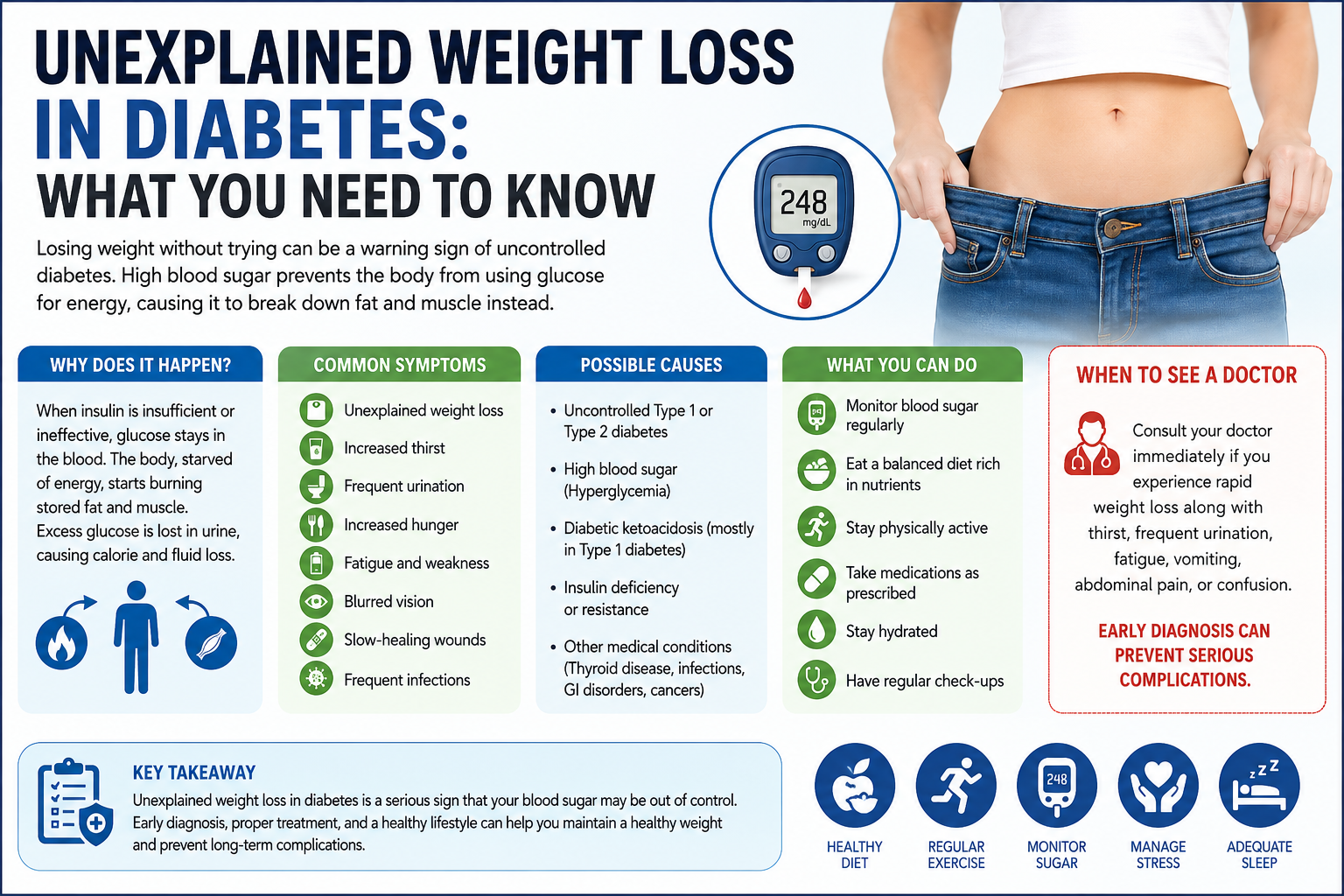
- Insulin Deficiency or Resistance – In diabetes, the body can’t use insulin properly or doesn’t make enough of it.
- Glucose Wasting – Excess sugar builds up in the blood but can’t enter the cells for energy.
- Fat and Muscle Breakdown – The body starts burning fat and muscle to meet energy demands.
- Frequent Urination – High sugar levels lead to dehydration and calorie loss through urine.
- Nutrient Loss – Poor glucose utilization means cells are starved even when food intake is normal.
Key Signs That Link Weight Loss to Diabetes
- Excessive thirst and dry mouth
- Frequent urination, especially at night
- Extreme fatigue or weakness
- Blurred vision
- Increased hunger (polyphagia)
- Slow-healing wounds or infections
Types of Diabetes and Weight Loss
- Type 1 Diabetes: Sudden, significant weight loss is often one of the first symptoms.
- Type 2 Diabetes: Gradual weight loss may occur if blood sugar remains uncontrolled for long.
- Gestational Diabetes: Usually does not cause weight loss but should be monitored closely.
When to Seek Medical Help
Consult a doctor if you notice:
- Sudden or unexplained weight loss
- Excessive thirst or urination
- Tiredness that doesn’t improve with rest
- Unexplained changes in appetite
A fasting blood sugar test, HbA1c, or glucose tolerance test can confirm or rule out diabetes.
Managing Weight and Blood Sugar
- Balanced Diet: Include complex carbs, lean proteins, and healthy fats.
- Regular Exercise: Improves insulin sensitivity and muscle mass.
- Hydration: Prevents dehydration from high blood sugar.
- Medical Supervision: Never stop or adjust diabetes medication without consulting your doctor.
Unintentional Weight Loss and Diabetes: What You Need to Know
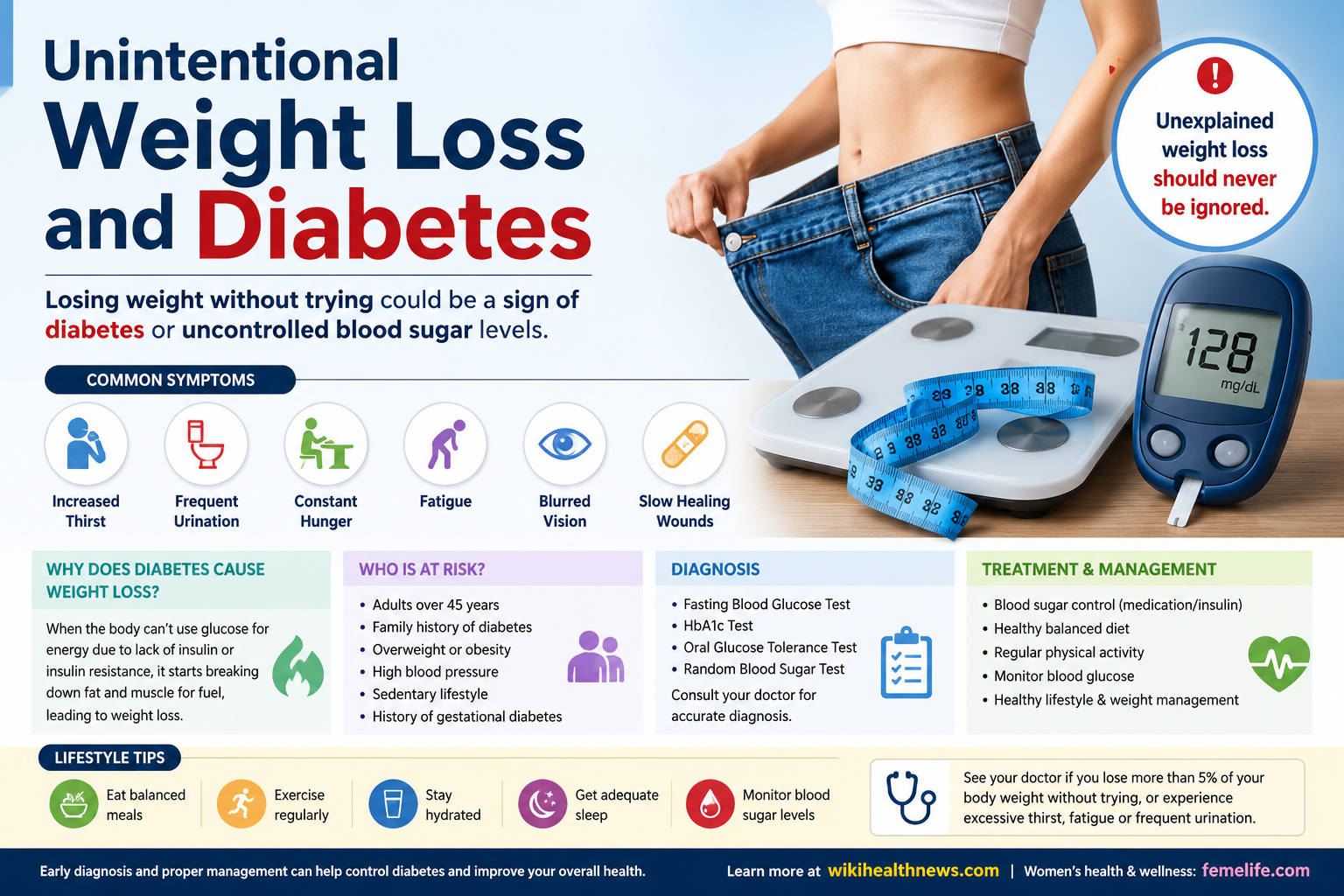
Unintentional weight loss and diabetes are closely connected, especially in people with undiagnosed or poorly controlled diabetes. While many individuals intentionally try to lose weight through diet and exercise, losing weight without making lifestyle changes can be a warning sign of an underlying health condition. Diabetes is one of the most common medical causes of unexplained weight loss.
Understanding why this happens and recognizing the accompanying symptoms can help ensure timely diagnosis and effective treatment.
Why Does Diabetes Cause Unintentional Weight Loss?
When you have diabetes, particularly Type 1 diabetes or uncontrolled Type 2 diabetes, your body cannot effectively use glucose (blood sugar) for energy due to insufficient insulin or insulin resistance.
Instead of using glucose, the body begins breaking down stored fat and muscle tissue for energy. This process leads to rapid and unintended weight loss.
Additionally, excess glucose is eliminated through urine, causing the body to lose calories and fluids, further contributing to weight loss.
Learn more about diabetes-related health conditions in the Diabetes section on WikiHealthNews:
https://diabetes-india.org/category/diabetes/
Common Symptoms That Accompany Weight Loss
If diabetes is the cause of unexplained weight loss, you may also experience:
- Increased thirst (polydipsia)
- Frequent urination (polyuria)
- Constant hunger
- Fatigue
- Blurred vision
- Slow-healing wounds
- Frequent infections
- Tingling or numbness in hands and feet
Experiencing several of these symptoms together warrants prompt medical evaluation.
Who Is Most at Risk?
Certain individuals have a higher risk of developing diabetes-related weight loss, including:
- Adults over 45 years
- People with obesity
- Individuals with a family history of diabetes
- Those with high blood pressure
- Women with a history of gestational diabetes
- People with sedentary lifestyles
Diagnosis
Healthcare providers typically diagnose diabetes using:
- Fasting Blood Glucose Test
- HbA1c Test
- Oral Glucose Tolerance Test (OGTT)
- Random Blood Sugar Test
Your physician may also investigate other possible causes of unexplained weight loss, including thyroid disorders, digestive diseases, infections, or cancer.
Treatment
The good news is that weight loss caused by diabetes often improves once blood sugar levels are controlled.
Treatment may include:
- Insulin therapy (particularly for Type 1 diabetes)
- Oral diabetes medications
- Healthy meal planning
- Regular physical activity
- Blood glucose monitoring
- Weight management counseling
Working with a registered dietitian can help restore healthy body weight while maintaining excellent blood sugar control.
Lifestyle Tips
Managing diabetes effectively involves healthy daily habits:
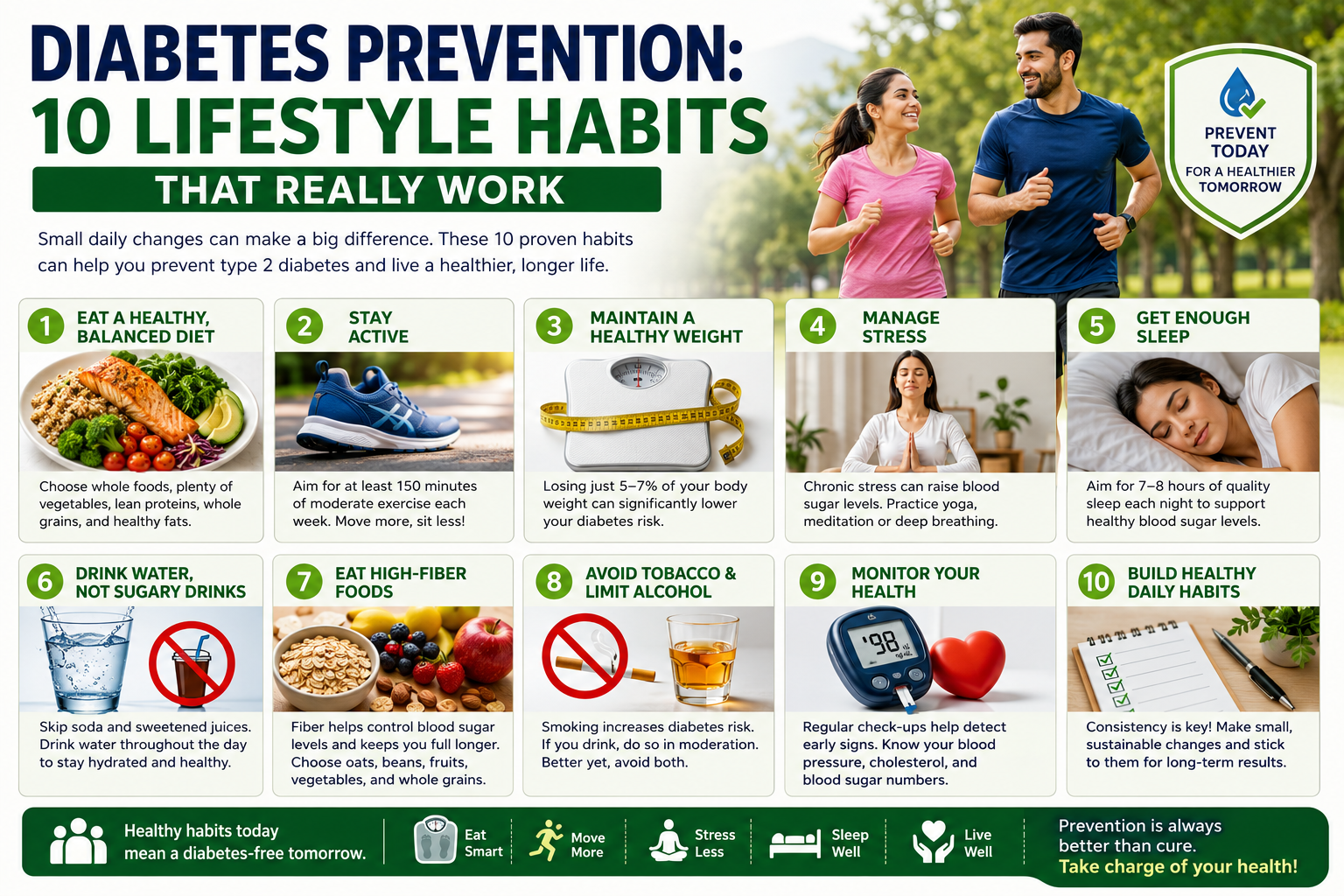
- Eat balanced meals rich in vegetables, whole grains, lean protein, and healthy fats.
- Avoid excessive sugary drinks and processed foods.
- Exercise for at least 150 minutes per week.
- Stay hydrated.
- Get adequate sleep.
- Monitor blood glucose as recommended by your healthcare provider.
When Should You See a Doctor?
Seek medical attention if you:
- Lose more than 5% of your body weight within 6–12 months without trying.
- Experience persistent thirst and frequent urination.
- Feel unusually tired.
- Notice blurry vision or recurring infections.
Early diagnosis can prevent serious complications affecting the heart, kidneys, nerves, and eyes.
For women’s diabetes wellness, nutrition, and lifestyle guidance, visit FemeLife:
https://femelife.com/
Final Thoughts
Unintentional weight loss and diabetes often go hand in hand, especially when diabetes remains undiagnosed or poorly controlled. While unexplained weight loss should never be ignored, early diagnosis and proper treatment can restore healthy weight and significantly improve long-term health outcomes.
If you notice persistent weight loss along with increased thirst, frequent urination, or fatigue, consult your healthcare provider promptly. Early intervention remains the key to preventing diabetes complications and maintaining overall well-being.
Keywords: unintentional weight loss and diabetes, unexplained weight loss, diabetes symptoms, Type 2 diabetes, Type 1 diabetes, blood sugar, diabetes diagnosis, diabetes treatment, healthy weight, diabetes management.
Bottom Line
Unintentional weight loss can be an early indicator of diabetes, especially if accompanied by other symptoms like thirst, fatigue, or frequent urination. Early detection and lifestyle changes can prevent serious complications and restore healthy body weight.
unintentional weight loss diabetes, sudden weight loss diabetes symptoms, diabetes weight loss causes, unexplained weight loss type 1 diabetes, signs of diabetes weight loss, diabetes early symptoms, weight loss due to diabetes treatment