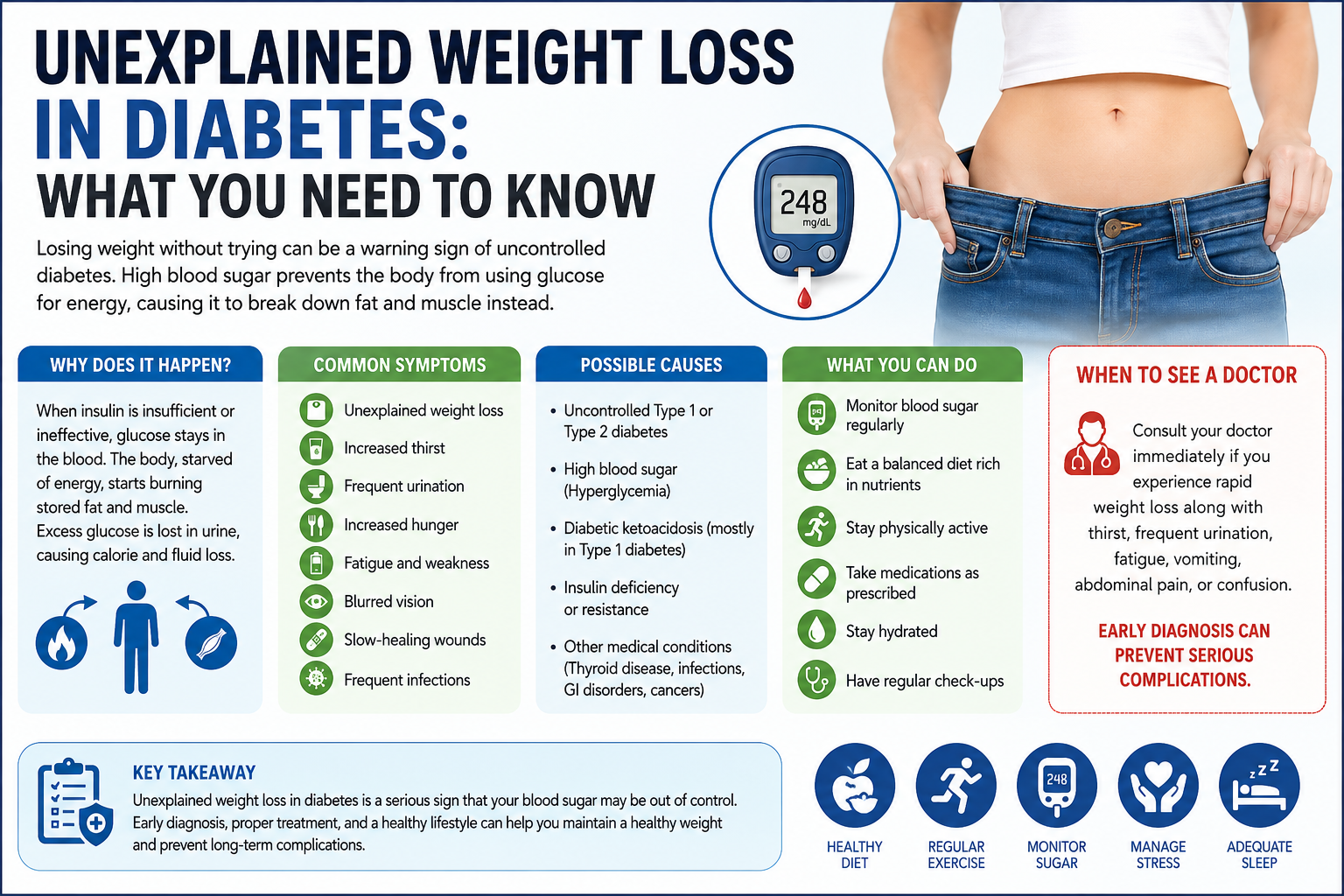
Unexplained Weight Loss in Diabetes: What You Need to Know
Can unexplained weight loss indicate diabetes?
Yes — unexplained weight loss can be an early sign of diabetes, particularly Type 1 diabetes and sometimes Type 2 diabetes.
Here’s why it happens:
- Insulin deficiency or resistance:
When your body doesn’t produce enough insulin (Type 1) or can’t use it effectively (Type 2), glucose (sugar) cannot enter cells for energy. - Fat and muscle breakdown:
Since the cells are “starved” of energy, the body starts breaking down fat and muscle to generate energy, leading to weight loss even if your appetite and food intake are normal or increased. - Loss of calories through urine:
Excess glucose spills into the urine, causing your body to lose calories and fluids, which adds to the weight loss.
🔍 Other symptoms that often accompany diabetic weight loss:
- Increased thirst (polydipsia)
- Frequent urination (polyuria)
- Extreme hunger (polyphagia)
- Fatigue and weakness
- Blurred vision
- Slow wound healing
⚠️ When to see a doctor
If you notice unintentional weight loss of more than 4–5 kg (8–10 lbs) over a few months along with the above symptoms, it’s important to get your blood sugar levels tested (fasting glucose, HbA1c, or an oral glucose tolerance test).
Would you like me to make an infographic or a short SEO-friendly article titled
“Unexplained Weight Loss: A Warning Sign of Diabetes” for your website or social post?
🩸 Unexplained Weight Loss: A Warning Sign of Diabetes
30 Short Questions and Answers (Each with 5 Key Points)
1️⃣ What is unexplained weight loss?
- Weight loss without dieting or increased exercise
- Often indicates an underlying medical issue
- Common in metabolic or hormonal disorders
- Can result from calorie or nutrient loss
- Needs medical evaluation if persistent
2️⃣ Can diabetes cause unexplained weight loss?
- Yes, especially in Type 1 and some Type 2 cases
- Due to poor glucose utilization
- Body breaks down fat and muscle for energy
- Excess glucose lost through urine
- Leads to visible weight loss
3️⃣ Why does the body lose weight in diabetes?
- Lack of insulin prevents glucose uptake
- Fat and muscle breakdown increases
- Energy loss through urination
- Dehydration adds to weight drop
- Metabolic imbalance persists until treated
4️⃣ Is weight loss more common in Type 1 or Type 2 diabetes?
- More common in Type 1 diabetes
- Type 1 involves absolute insulin deficiency
- Type 2 patients often gain weight initially
- Weight loss in Type 2 occurs with advanced disease
- Both need medical assessment
5️⃣ How much weight loss is concerning?
- More than 4–5 kg in 2–3 months
- When not explained by diet or exercise
- Especially with other diabetic symptoms
- Indicates metabolic dysfunction
- Requires blood sugar testing
6️⃣ What are early symptoms of diabetes with weight loss?
- Increased thirst (polydipsia)
- Frequent urination (polyuria)
- Excess hunger (polyphagia)
- Fatigue and weakness
- Blurred vision
7️⃣ Can young people experience diabetic weight loss?
- Yes, often in Type 1 diabetes onset
- Rapid weight loss over weeks
- Associated with high blood glucose
- May include nausea and dehydration
- Needs immediate medical care
8️⃣ What tests confirm diabetes in unexplained weight loss?
- Fasting blood glucose test
- HbA1c (average sugar over 3 months)
- Oral glucose tolerance test (OGTT)
- Random blood glucose
- Urine sugar and ketone tests
9️⃣ How is unexplained weight loss treated in diabetes?
- Control blood sugar levels
- Start insulin or oral medications
- Improve nutrition and hydration
- Regular monitoring by doctor
- Address complications if present
🔵────────────────────────────
10️⃣ Does insulin treatment reverse weight loss?
- Yes, once sugar control improves
- Cells start using glucose properly
- Fat and muscle stores recover
- Weight gradually stabilizes
- Healthy diet enhances recovery
11️⃣ Can Type 2 diabetics lose weight intentionally?
- Yes, if overweight
- Helps improve insulin sensitivity
- Must be gradual and healthy
- Supervised by a doctor/dietitian
- Avoid rapid or unexplained loss
12️⃣ Why is early detection important?
- Prevents severe dehydration and ketoacidosis
- Reduces risk of nerve and kidney damage
- Improves treatment outcomes
- Stabilizes metabolism
- Avoids hospital complications
13️⃣ What is diabetic ketoacidosis (DKA)?
- Serious complication of Type 1 diabetes
- Body burns fat excessively for energy
- Produces dangerous ketones
- Causes vomiting and rapid weight loss
- Medical emergency requiring insulin
14️⃣ How can diet prevent weight loss in diabetes?
- Include balanced meals with carbs, proteins, fats
- Frequent small meals
- Avoid skipping breakfast
- Stay hydrated
- Consult a dietitian
15️⃣ Are there warning signs before weight loss begins?
- Frequent urination and thirst
- Feeling hungry all the time
- Fatigue and mood changes
- Blurred vision
- Slow-healing cuts or infections
🔵────────────────────────────
16️⃣ Can stress-related diabetes cause weight loss?
- Yes, stress hormones affect insulin
- Increases glucose levels
- Promotes fat and muscle breakdown
- Leads to metabolic imbalance
- Chronic stress worsens diabetes
17️⃣ What role does dehydration play in diabetic weight loss?
- Excess sugar draws water into urine
- Increases urination frequency
- Depletes body fluids
- Reduces weight temporarily
- Leads to fatigue and cramps
18️⃣ How does exercise affect diabetic weight loss?
- Healthy exercise helps control glucose
- Prevents muscle loss if balanced
- Over-exercise may worsen loss
- Needs proper meal planning
- Monitor sugar levels regularly
19️⃣ Can weight loss happen even with good appetite?
- Yes, common in uncontrolled diabetes
- Cells can’t use glucose despite eating
- Body burns stored fat and protein
- Increases hunger
- Results in paradoxical weight loss
20️⃣ How is diabetic weight loss different from normal diet loss?
- Not due to calorie restriction
- Associated with high sugar levels
- Rapid and unintended
- Often with fatigue and dehydration
- Requires medical testing
🔵────────────────────────────
21️⃣ What nutrients are most important for recovery?
- Lean protein for muscle repair
- Complex carbohydrates
- Healthy fats (nuts, olive oil)
- Vitamins B & D for energy
- Adequate hydration
22️⃣ Can undiagnosed diabetes mimic thyroid problems?
- Yes, both cause unexplained weight loss
- Share fatigue and mood symptoms
- Need glucose and thyroid testing
- Sometimes occur together
- Correct diagnosis is essential
23️⃣ Does age affect diabetic weight loss?
- More severe in young Type 1 diabetics
- Gradual in older Type 2 patients
- Elderly may lose muscle quickly
- Requires careful nutrition
- Regular follow-ups essential
24️⃣ Can weight loss improve insulin sensitivity?
- Yes, in Type 2 diabetes
- Reduces body fat and inflammation
- Lowers insulin resistance
- Improves sugar control
- Must be achieved healthily
25️⃣ What happens if weight loss is ignored?
- Blood sugar remains high
- Risk of ketoacidosis rises
- Weakness and dehydration worsen
- Muscle mass continues to drop
- Leads to hospital emergencies
🔵────────────────────────────
26️⃣ Can medications cause diabetic weight loss?
- Some drugs like SGLT2 inhibitors may
- Work by removing sugar through urine
- Mild weight loss is expected
- Excessive loss must be evaluated
- Doctor may adjust dosage
27️⃣ Is weight loss reversible after diabetes control?
- Yes, with proper treatment
- Balanced diet and glucose management
- Muscle and fat stores recover
- Physical activity helps rebuild strength
- Regular monitoring is key
28️⃣ What are the long-term risks if untreated?
- Severe dehydration and weakness
- Nerve and kidney damage
- Vision impairment
- Heart complications
- Diabetic coma or ketoacidosis
29️⃣ Can lifestyle changes prevent diabetic weight loss?
- Regular blood sugar checks
- Balanced diet and hydration
- Moderate exercise
- Stress management
- Routine medical supervision
30️⃣ When should you consult a doctor?
- Sudden unexplained weight loss
- Persistent thirst and urination
- Increased appetite with fatigue
- Family history of diabetes
- Blurred vision or slow healing wounds
Yes, unexplained weight loss can be a significant sign of diabetes, particularly if it occurs suddenly or alongside other symptoms like increased thirst and frequent urination. While weight loss is a recognized symptom of uncontrolled diabetes, it is not the only cause of unexplained weight loss. Therefore, any sudden, unintentional weight loss should be evaluated by a doctor to rule out diabetes or other medical conditions.
Why diabetes causes weight loss
In diabetes, the body cannot effectively use glucose (sugar) for energy, leading to unintentional weight loss. This happens for a few key reasons:
- Burning fat and muscle for energy: When cells cannot get enough glucose for fuel, the body starts to burn stored fat and muscle for energy instead. This process leads to a reduction in overall body mass.
- Excessive urination: High blood sugar levels force the kidneys to work overtime to filter and excrete the extra glucose through urine. This process takes a lot of energy and also causes the body to lose fluids and calories, which contributes to weight loss.
Weight loss in Type 1 vs. Type 2 diabetes
Unexplained weight loss can occur in both types of diabetes, but it is more common and often more noticeable in people with Type 1 diabetes.
- Type 1 diabetes: This is an autoimmune condition where the body does not produce enough insulin. Without insulin, the body cannot use glucose for energy, so it begins to break down fat and muscle, leading to sudden and noticeable weight loss.
- Type 2 diabetes: In this form, the body becomes resistant to the effects of insulin. While weight loss can be a symptom of poorly managed Type 2 diabetes, it is less common than in Type 1.
Other signs of diabetes to watch for
Unexplained weight loss due to diabetes is not usually an isolated symptom. It is often accompanied by other warning signs that signal a need for medical evaluation:
- Excessive thirst and dry mouth
- Frequent urination
- Increased hunger
- Unusual fatigue
- Blurred vision
- Slow-healing sores or frequent infections
- Tingling or numbness in the hands and feet
When to see a doctor?
If you experience significant weight loss without a clear reason, especially if you have other symptoms of diabetes, it is important to see a healthcare provider. A noticeable drop in weight could also be a sign of other conditions, such as a thyroid disorder, celiac disease, or cancer. A doctor can perform a physical examination and run blood tests to determine the underlying cause.
Read More
Unexplained Weight Loss in Diabetes: What You Need to Know
SEO Title: Unexplained Weight Loss in Diabetes: Causes, Symptoms & Treatment
Focus Keyword: Unexplained Weight Loss in Diabetes
Meta Description: Experiencing unexplained weight loss in diabetes? Learn the causes, symptoms, diagnosis, treatment, and when to seek medical care for healthy weight management.
Unexplained Weight Loss in Diabetes: What You Need to Know
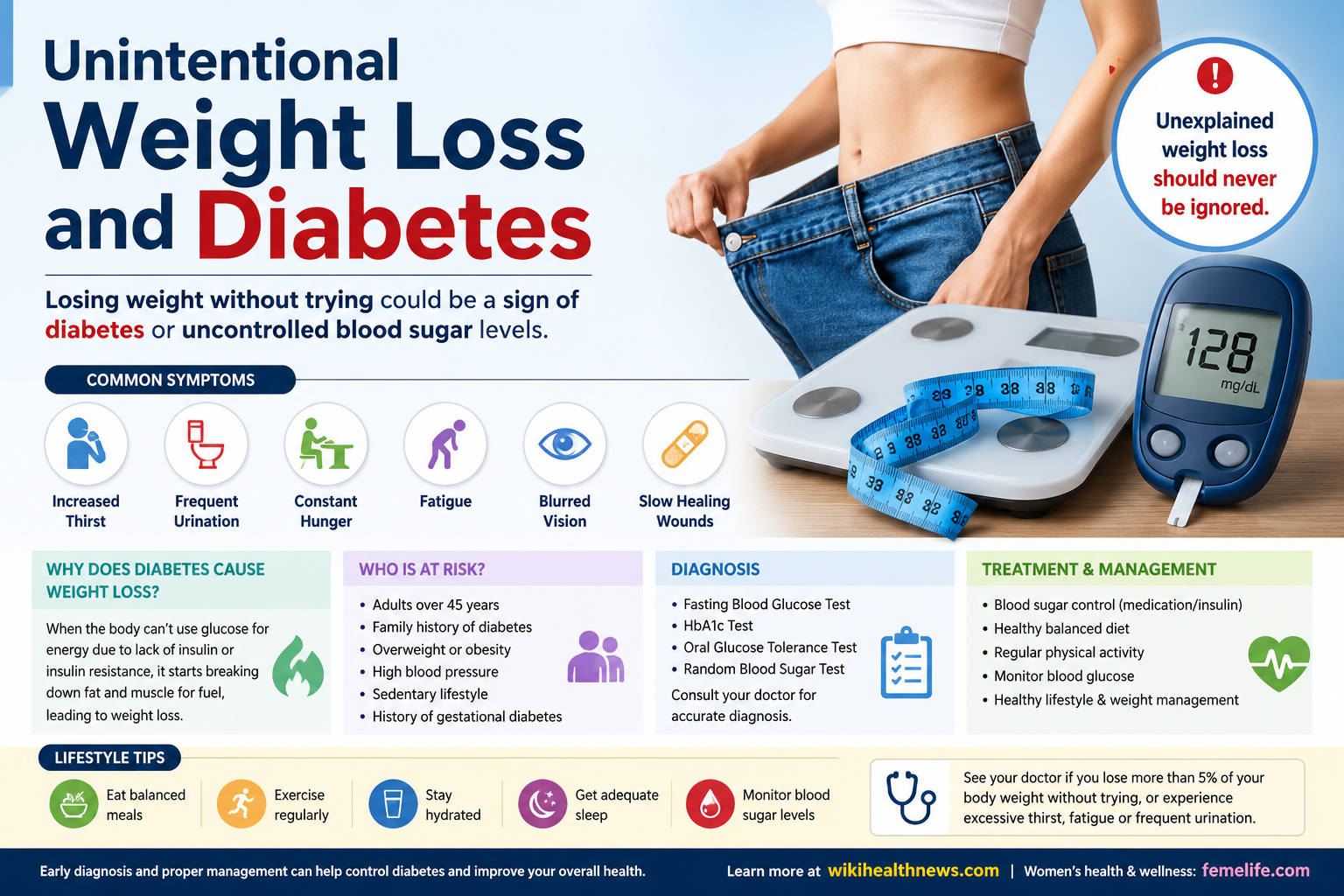
Unexplained weight loss in diabetes is often one of the earliest warning signs that blood sugar levels are not under control. While some people intentionally lose weight through healthy eating and exercise, losing weight without trying can indicate an underlying medical problem. In diabetes, particularly when it is undiagnosed or poorly managed, the body cannot use glucose efficiently for energy. As a result, it starts breaking down fat and muscle, leading to noticeable weight loss.
Why Does Diabetes Cause Unexplained Weight Loss?
Normally, insulin helps glucose move from the bloodstream into the body’s cells, where it is used for energy. In Type 1 diabetes, the body produces little or no insulin, while in Type 2 diabetes, insulin does not work effectively due to insulin resistance. Without enough usable insulin, glucose remains in the bloodstream instead of entering the cells.
Since the cells are deprived of energy, the body begins to burn stored fat and muscle protein for fuel. At the same time, excess glucose is eliminated through urine, causing loss of calories and fluids. This combination often results in rapid, unexplained weight loss.
Common Symptoms
In addition to unexplained weight loss in diabetes, you may notice:
- Increased thirst (polydipsia)
- Frequent urination (polyuria)
- Excessive hunger (polyphagia)
- Fatigue and weakness
- Blurred vision
- Slow-healing wounds
- Frequent infections
- Tingling or numbness in the hands and feet
If these symptoms occur together, it is important to seek medical evaluation promptly.
Diagnosis
Doctors diagnose diabetes using blood tests, including:
- Fasting Blood Glucose
- HbA1c (Glycated Hemoglobin)
- Random Blood Sugar
- Oral Glucose Tolerance Test (OGTT)
Additional tests may be recommended to identify complications or other causes of weight loss, such as thyroid disease, infections, or gastrointestinal disorders.
Treatment and Weight Management
The primary goal is to control blood sugar levels while maintaining a healthy body weight. Treatment may include:
- Insulin therapy (especially for Type 1 diabetes)
- Oral diabetes medications
- A balanced, nutrient-rich diet
- Regular physical activity
- Adequate hydration
- Routine blood glucose monitoring
Working with a healthcare team, including an endocrinologist and a registered dietitian, can help develop a personalized diabetes management plan.
When Should You See a Doctor?
Consult a healthcare provider immediately if you experience rapid or unexplained weight loss in diabetes, especially if it is accompanied by severe thirst, excessive urination, persistent fatigue, vomiting, abdominal pain, or confusion. Early diagnosis and treatment can prevent serious complications such as diabetic ketoacidosis, nerve damage, kidney disease, and cardiovascular problems.
Prevention Tips
Although not every case can be prevented, the following habits reduce the risk of diabetes-related complications:
- Maintain a healthy weight.
- Eat a balanced diet rich in vegetables, fruits, whole grains, and lean proteins.
- Exercise for at least 150 minutes each week.
- Avoid smoking and limit alcohol intake.
- Monitor blood sugar regularly if you have diabetes.
- Attend routine medical check-ups.
Conclusion
Unexplained weight loss in diabetes should never be ignored. It may be an early sign of uncontrolled blood sugar and requires prompt medical attention. Early diagnosis, proper treatment, healthy nutrition, regular exercise, and ongoing monitoring can help restore a healthy weight and reduce the risk of long-term complications. If you notice sudden weight loss without trying, consult your healthcare provider for a comprehensive evaluation.
Suggested Internal Links (Femelife)
- Diabetes Care Services
- Endocrinology Department
- Preventive Health Checkups
- Nutrition & Diet Counseling
- Obesity Management
- General Physician Consultation
Recommended Outbound Resources
For additional evidence-based information, visit:
- American Diabetes Association
- International Diabetes Federation
- World Health Organization
- National Institute of Diabetes and Digestive and Kidney Diseases
Unexplained Weight Loss in Diabetes, Diabetes Weight Loss, Type 1 Diabetes, Type 2 Diabetes, Diabetes Symptoms, Blood Sugar, Hyperglycemia, Diabetes Management, Healthy Weight, Endocrinology